
The Anatomy of Modern Luxury Triumphs: Strategic Trend Analysis and Real-World Paradigms
A rigorous examination of contemporary luxury success stories, deconstructing how heritage houses and agile boutique enterprises master scarcity, client intimacy, and structural resilience in volatile markets.
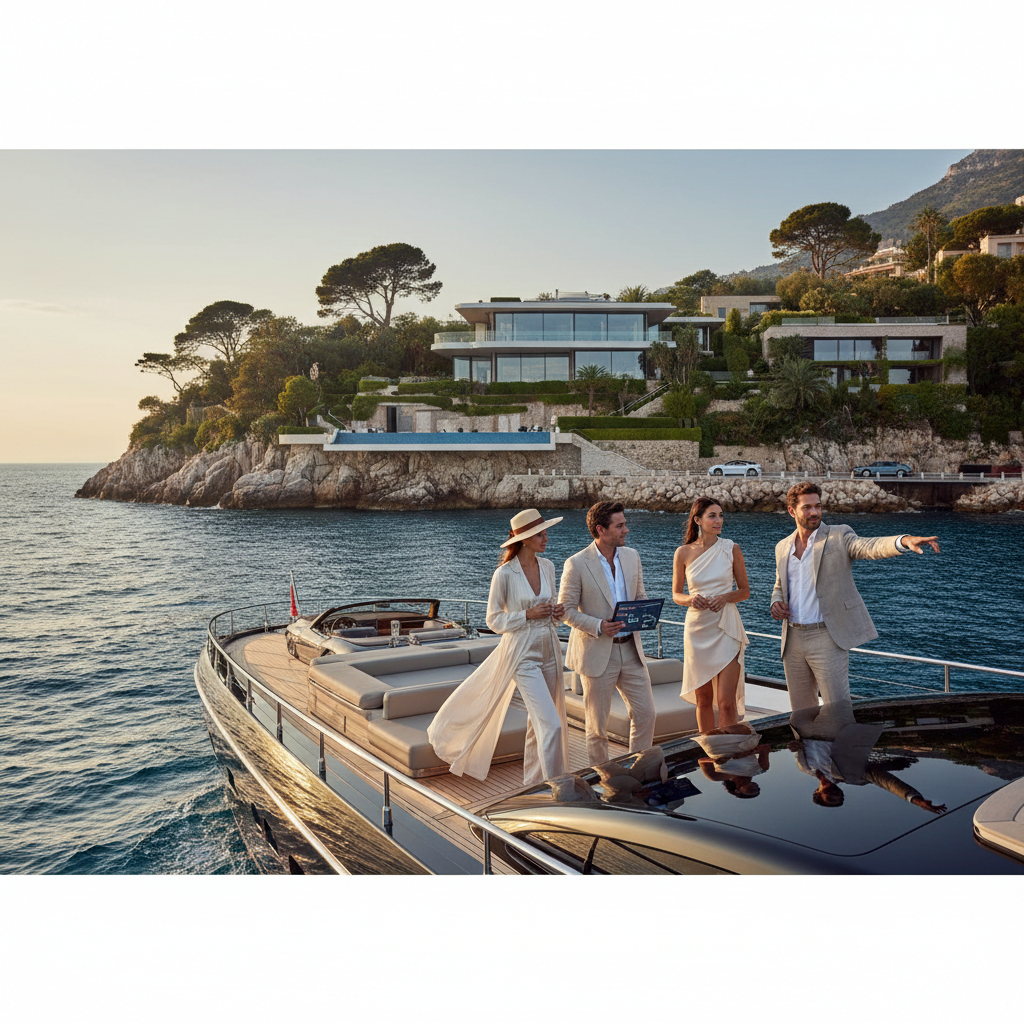
In an era defined by macro-financial reconfiguration, changing geopolitical currents, and the rapid wealth accumulation of a technologically empowered global elite, modern luxury success stories have ceased to be purely romantic tales of creative serendipity. Instead, modern commercial triumphs within the ultra-premium sphere are engineered through rigorous architectural discipline, deep operational sophistication, and an unyielding commitment to experiential authenticity. From family dynasties preserving generational capital across complex jurisdictions to multi-asset brokers orchestrating landmark transactions along the Côte d’Azur, analyzing these breakthrough trajectories reveals the precise strategies required to thrive at the absolute apex of commerce.
The Evolution of Modern Luxury Triumphs: From Ostentation to Intellectual Capital
Historically, success in the luxury sector was measured predominantly through visible consumption and brand ubiquity. The late twentieth century celebrated exponential retail expansion, heavy logo placement, and broad-spectrum licensing agreements. However, over the past decade, and accelerated substantially between 2020 and 2025, the parameters defining elite brand success have inverted. True prestige is increasingly defined by scrupulous scarcity, verifiable provenance, hyper-personalisation, and the depth of intellectual capital underpinning client relationships.
Discerning consumers and Ultra-High-Net-Worth Individuals (UHNWIs) no longer seek luxury products simply as badges of financial arrival. Instead, luxury purchases represent sovereign identity, intellectual validation, and enduring value preservation. Whether evaluating the remarkable resilience of independent maisons or examining the operational agility of bespoke advisory boutiques, today's triumphant market players view their operations not merely as merchant enterprises, but as custodians of cultural and financial heritage. Understanding these dynamics demands a structured grasp of the fundamental Principles of Luxury Course, which delineates how emotional equity is converted into structural pricing power.
As explored in our critical analysis on deconstructing modern luxury success stories, the common denominator linking contemporary market leaders is their refusal to succumb to volume-driven commercial pressures. By engineering friction into the transaction cycle, cultivating rigorous exclusivity, and delivering uncompromised bespoke service, these entities command extraordinary client loyalty and astronomical operating margins, setting benchmarks that redefine global luxury standards.
Macro-Trends Reshaping the Global Luxury Ecosystem
To accurately contextualise current success stories, industry analysts must dissect the macro-currents governing private wealth creation, mobility, and discretionary deployment. Modern triumphs do not occur in a vacuum; they represent calculated responses to fundamental shifts in how global elites live, invest, and curate their operational environments.
Four primary cross-industry trends characterise the current luxury landscape:
- The Institutionalisation of Private Wealth Management: Family offices and private client advisors have transitioned from transactional managers into highly sophisticated, multi-jurisdictional institutional hubs requiring certified strategic mastery.
- The Primacy of Hard and Mobile Assets: Geopolitical realignments have amplified demand for sovereign-level mobility assets, driving record valuations in yachting, private aviation, and trophy real estate.
- The Strategic Elevation of Scarcity: Houses that actively curtailed supply and tightened allocation channels have substantially outperformed conglomerates that prioritized volume expansion.
- The Hyper-Bespoke Service Standard: Commoditised high-end service has been supplanted by hyper-curated, discreet client engagement where the professional is viewed as an indispensable peer advisor.
These trends demonstrate that contemporary success is firmly decoupled from general economic cycles. Discerning entities that master these structural pillars consistently insulate themselves from consumer market downturns, unlocking sustained profitability.
Concrete Case Studies: Deconstructing Sector-Specific Excellence
Case Study 1: The Independent Maison — Hermès and the Mastery of Controlled Scarcity
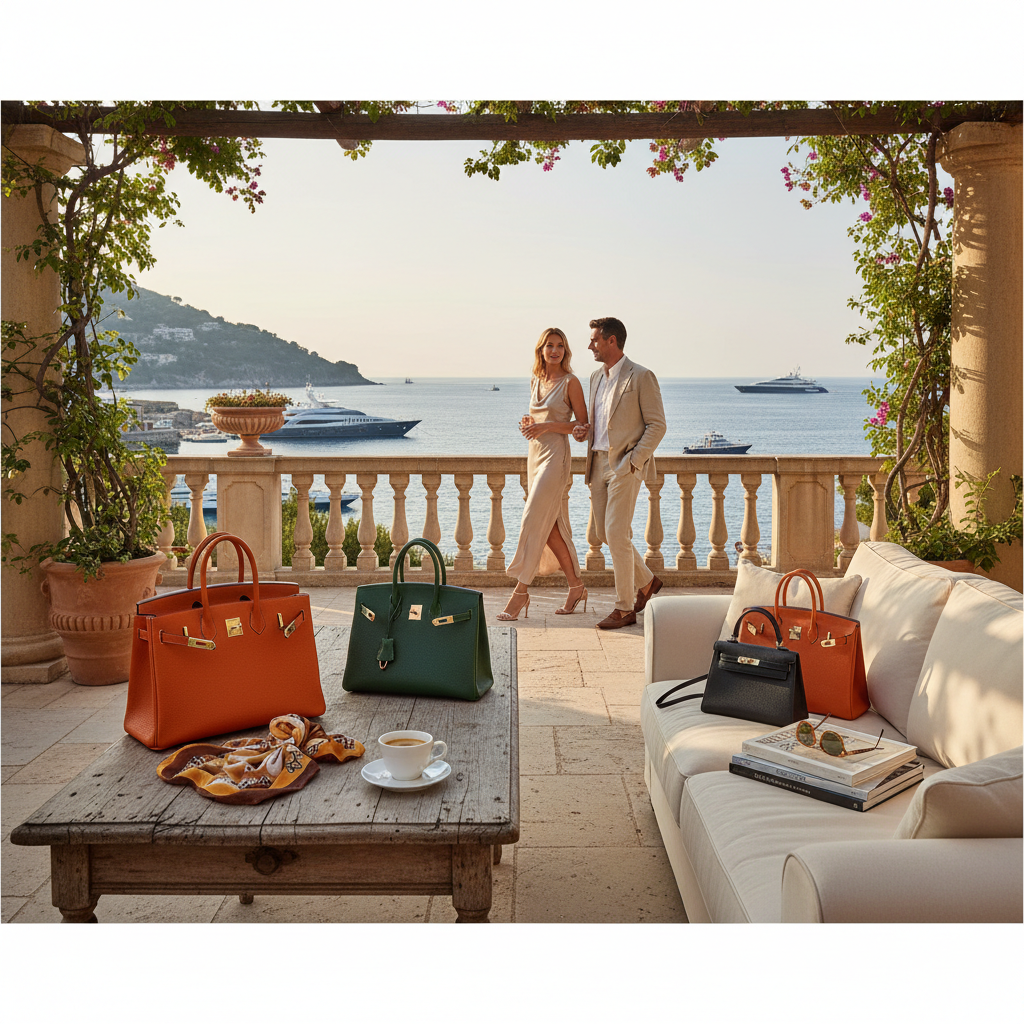
Perhaps no corporate narrative illustrates sustainable luxury excellence more vividly than Hermès International. While widespread fashion and leather-goods conglomerates experienced severe cyclical volatility across primary Asian and North American markets throughout recent reporting periods, Hermès posted persistent, double-digit organic revenue growth and industry-leading operating margins exceeding forty per cent.
The operational mechanics driving this sustained triumph warrant forensic analysis. Hermès fundamentally rejects typical industrial supply-chain practices. Rather than indexing production targets to quarterly market demand forecasts, production remains anchored strictly to the physical capacity of their regional French craft ateliers. Every artisan is trained for up to two years before touching an iconic Kelly or Birkin leather piece. This produces an organic, structurally unbridgeable demand-supply deficit. As deconstructed in our case study on Hermès' enduring success in the age of fleeting trends, this operational architecture protects the house from inventory markdowns, preserves long-term enterprise valuation, and elevates their goods into alternative asset classes.
Crucially, Hermès maintains rigorous control over its international distribution footprint, avoiding the dilution inherent in third-party wholesale or reckless e-commerce expansion. For modern professionals, the lesson is clear: authentic luxury strategy is the art of deliberately refusing immediate scale in order to protect generational brand equity. Mastering this discipline requires rigorous training, such as that offered within the certified Luxury Brand Management Course, where strategic pricing, distribution control, and brand equity stewardship are examined at an executive level.
Case Study 2: Monaco’s Maritime and Superyacht Renaissance
The Mediterranean maritime corridor, anchored definitively by the Principality of Monaco, has witnessed a fundamental evolution from leisure chartering to institutional-grade asset stewardship. The international yachting sector historically operated on fragmented brokerages and opaque fee structures. Over the past five years, however, the successful firms dominating Port Hercule have reinvented themselves as comprehensive maritime advisory firms offering technical management, refit engineering, VAT structuring, and charter-yield optimization under a single umbrella.
Consider the performance of boutique brokerages that systematically pivoted from casual commission sales to integrated lifecycle consultancy. During recent yachting cycles, firms that merely facilitated hull acquisitions struggled against shifting maritime regulations and heightened compliance burdens. Conversely, enterprises offering complete turnkey governance—handling everything from flag state registrations and IMO decarbonisation mandates to bespoke crew management—secured long-term recurring retained earnings.
This operational pivot requires an entirely new breed of professional capable of navigating maritime law, naval engineering, and private client psychology. Professionals aspiring to lead within this lucrative arena must cultivate comprehensive operational fluency via the certified Luxury Yacht Manager Course, which addresses the financial, operational, and regulatory intricacies demanded by contemporary vessel owners. Furthermore, transaction advisors who master cross-border structuring through the Yacht Brokerage Course have established historic commission benchmarks by advising principals on the commissioning of gigayachts exceeding one hundred metres in length.
Case Study 3: The Cross-Asset Brokerage Elite
A third defining trend in contemporary luxury success is the convergence of high-value tangible assets. Historically, a prime real estate broker operated entirely apart from private aviation specialists or fine art dealers. Today, modern UHNWIs operate within consolidated ecosystems, preferring to entrust their entire tangible asset acquisitions to a trusted, highly accredited sovereign advisor.
A compelling example is observed among independent advisory partnerships operating out of Monaco, Geneva, and London. Leading brokers have developed unified multi-asset transaction capabilities, representing the same family across the acquisition of a Cap d'Antibes waterfront estate, a long-range Bombardier Global 7500 aircraft, and bespoke superyacht berths. By transcending single-category limitations, these practitioners eliminate friction for the family office, protect client privacy, and capture multiple high-margin commission streams across a unified relationship lifecycle.
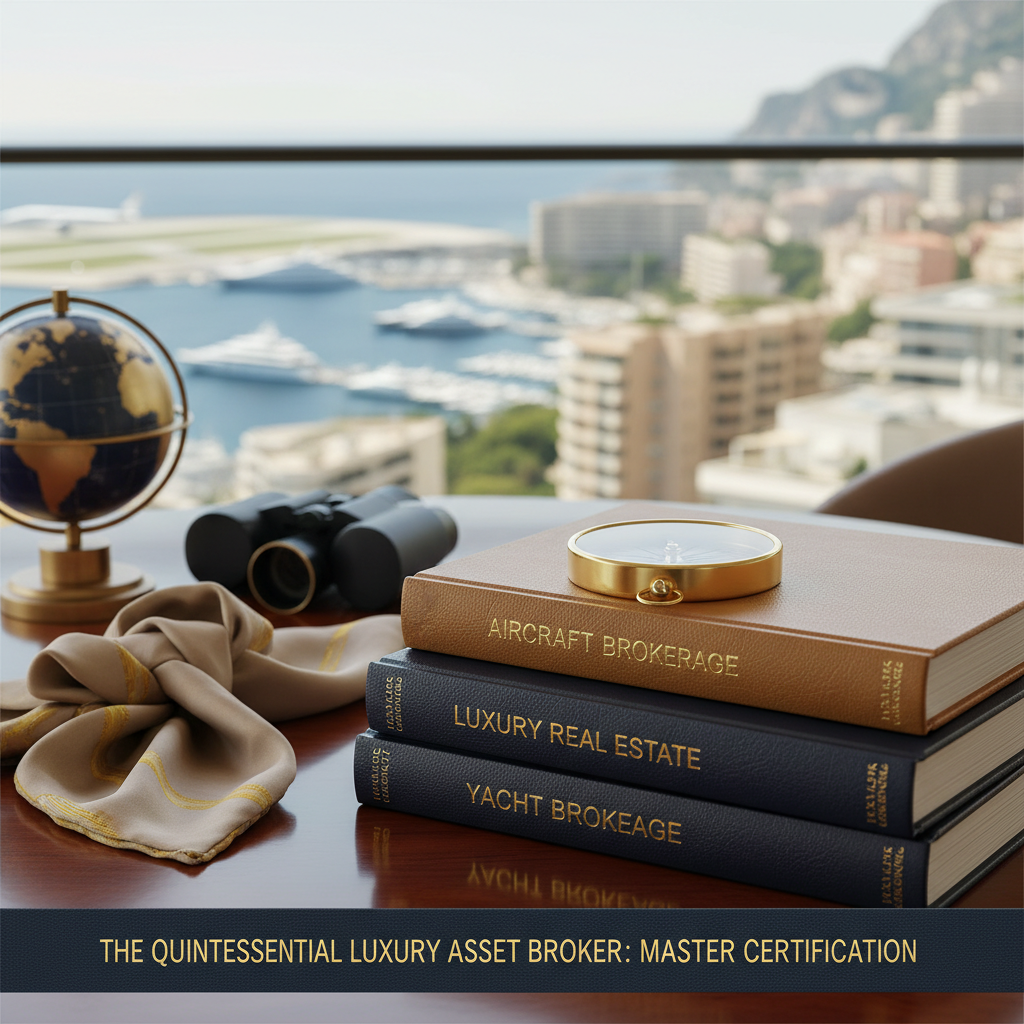
This integrated advisory model represents the structural future of elite dealmaking. Professionals who position themselves at this multi-disciplinary crossroads do so by undertaking comprehensive executive training such as The Quintessential Luxury Asset Broker: Master Certification, an elite program specifically designed to synthesize prime property, private aviation, and maritime brokerage into a cohesive, high-yield practice.
The Family Office Revolution: Governance, Succession, and Strategic Capital
Behind almost every contemporary luxury success story lies the strategic deployment of family office capital. The past half-decade has witnessed an unprecedented intergenerational wealth transfer, with tens of trillions of dollars transitioning from post-war baby boomer patriarchs to millennial and Gen-Z successors. This demographic transition has fundamentally revolutionized family office governance.
Today’s high-performing Single Family Offices (SFOs) and Multi-Family Offices (MFOs) operate with analytical capabilities that rival top-tier private equity funds. They no longer restrict their portfolios to conventional equity indices or passive sovereign bonds. Instead, they allocate significant balances to direct venture investments, regenerative real estate, private debt, and tangible passion assets managed with institutional rigour.
Modern family office leaders are tasked with orchestrating complex structures that balance aggressive capital preservation with the philanthropic and lifestyle imperatives of dynamic family members. Professionals aiming to steer these private institutions require multi-disciplinary expertise spanning trust structuring, jurisdictional tax efficiency, cross-border compliance, and diplomatic family mediation. Developing this sophisticated operational framework is the core objective of the specialized Family Office Management Course, which prepares executives to direct complex private estates with absolute discretion and fiduciary authority.
Complementing this governance structure is the evolving role of the private banker. The relationship between UHNW families and financial institutions has evolved beyond standard credit lines into bespoke liquidity architecture, structured Lombard loans against physical assets, and private placement opportunities. Executives navigating these high-stakes capital allocations continually validate their analytical acumen through the specialized Private Banking Course.
The Anatomy of Modern Luxury Success: Structural Pillars
A rigorous review of high-performing enterprises across the luxury, maritime, real estate, and financial advisory landscapes demonstrates that their achievements are not accidental. They stem from a systematic adherence to four interconnected structural pillars:
-
Institutional Discretion and Data Sovereignty:
In an age characterised by ubiquitous digital exposure, absolute privacy has become the ultimate luxury commodity. Triumphant enterprises build impregnable firewalls around their client identities, operational methodologies, and asset registries. They recognize that for sovereign principals, discretion is not a marketing catchphrase—it is an existential imperative.
-
Cross-Disciplinary Analytical Fluency:
The era of the purely charming, single-discipline salesperson is over. Today's top-performing advisors speak the multi-faceted language of legal counsel, tax accountants, private equity partners, and creative directors. Whether structuring the cross-border acquisition of a classic masterpiece or brokering prime commercial real estate, they navigate contractual and regulatory complexities with peer-level fluency.
-
Radical Client Alignment:
Successful firms operate with transparent fiduciary clarity. They align their organizational incentives directly with the long-term wealth preservation and reputational sanctity of their principals, eschewing short-term transactional commissions in favor of multi-decade advisory tenures.
-
Sovereign Hub Anchoring:
Location remains decisive. The world's most lucrative luxury success stories inevitably anchor their operations within primary jurisdictional safe havens that offer political stability, robust rule of law, fiscal transparency, and exceptional security. In this regard, the Principality remains the undisputed global capital of UHNW enterprise.
Why Monaco Remains the Ultimate Testing Ground for Luxury Leadership
There is no geography on earth that concentrates ultra-high-net-worth capital, sovereign mobility, and high-stakes luxury enterprise with the density and sophistication of the Principality of Monaco. Spanning just over two square kilometres, this sovereign enclave concentrates more wealth per square metre than any other jurisdiction globally.
To understand why Monaco is the epicentre of luxury success stories, one must examine its structural foundation. It is an internationally compliant, politically neutral sovereign state that guarantees physical security, exceptional healthcare, high-calibre educational infrastructure, and absolute respect for private enterprise. As elaborated on our Why Monaco analysis, the Principality functions as an irreplaceable living laboratory where luxury brands, family offices, private banks, and maritime brokerages interface directly with their primary global clientele daily.
In Monaco, high-end business transactions do not occur through distant corporate channels; they are cultivated over lunch at the Yacht Club de Monaco, negotiated in the private salons of the Hôtel de Paris, and finalised during iconic global gatherings such as the Monaco Yacht Show and the Grand Prix. Consequently, professionals who master the operational and social codes of Monaco develop a profound competitive advantage that resonates across every major financial hub worldwide.
Strategic Takeaways for the Next Generation of Luxury Executives
For entrepreneurs, advisors, and executives aspiring to write the next chapter of luxury success, the operational benchmarks are demanding. Relying on intuition and legacy business practices is no longer sufficient in an increasingly institutionalized and hyper-regulated global marketplace. Achieving sustained success requires deliberate intellectual investment and strategic positioning.
First, executives must embrace continuous, specialized accreditation. The complexity of today's wealth landscape means that generalized business qualifications are insufficient. Industry-specific knowledge—spanning maritime operations, private aviation law, haute horlogerie connoisseurship, and family office structures—is mandatory to establish credibility with sophisticated principals.
Second, luxury leaders must view technology not as a commoditising threat, but as an operational foundation that frees up human bandwidth for hyper-personalised client interactions. Artificial intelligence and advanced CRM architectures should be deployed to handle compliance checks, predictive market analytics, and transaction workflow management, allowing advisors to dedicate their energy entirely to bespoke relationship cultivation.
Third, professionals must cultivate a truly global perspective anchored in deep jurisdictional understanding. The contemporary UHNW client base is intensely mobile, operating across multiple residences in London, Dubai, Singapore, New York, and Saint-Jean-Cap-Ferrat. Advisors who can seamlessly coordinate assets across these varied jurisdictions will remain fundamentally irreplaceable.
Conclusion: The Architecture of Enduring Excellence
The contemporary luxury success stories analysed across this investigation confirm a definitive truth: sustainable commercial triumph in the high-net-worth sphere is an exact science. It is built on the deliberate preservation of scarcity, the unyielding protection of client privacy, the institutionalisation of bespoke advisory services, and an intimate mastery of sovereign financial jurisdictions.
As the international wealth landscape continues to transform under demographic shifts and technological disruption, the individuals and organizations that will flourish are those who view luxury not merely as an aesthetic craft, but as an elevated discipline of strategic asset stewardship. By mastering these structural realities, ambitious professionals can position themselves not merely as passive observers of the luxury market, but as the primary architects of its most enduring triumphs.
Tagged
Written by
Monaco Academy Editorial
Editorial Team
Put this into practice
Courses and programs on this subject
Luxury Brand Management Course
Become a Certified Luxury Brand Manager, mastering the art and science of building and sustaining prestigious brands in a competitive global market.

Wealth & Investment Management Course
Become a Certified Wealth & Investment Manager, mastering advanced strategies to navigate global financial markets and serve discerning clientele.
Family Office Management Course
Become a Certified Family Office Manager leading ultra-high-net-worth families with bespoke financial, legal, and lifestyle solutions.
Related programs
Continue reading
Related articles

19 October 2026 · 12 min
Beyond the Hype: Deconstructing Hermes' Enduring Success in the Age of Fleeting Trends
In an era defined by rapid cycles and fleeting fads, Hermes stands as a testament to timeless luxury. This in-depth case study meticulously unpacks the strategic pillars behind Hermes' unparalleled longevity and sustained allure, offering invaluable insights for luxury professionals, entrepreneurs, and HNWI advisors navigating an ever-evolving market. Discover how meticulous craftsmanship, brand narrative, and client relationship management coalesce to create enduring value, providing a blueprin

06 October 2026 · 11 min
Beyond the Bling: Deconstructing Modern Luxury Success Stories for Actionable Insights
In an era of rapid transformation, discerning professionals, entrepreneurs, and HNWI advisors must look beyond superficial glamour to understand the strategic underpinnings of enduring luxury success. This article delves into contemporary luxury brand triumphs, offering a nuanced trend analysis with concrete examples to illuminate pathways for sustained growth and innovation.
24 September 2026 · 11 min
Beyond the Hype: Deconstructing Hermes' Enduring Success in the Age of Fleeting Trends
In a world of ephemeral luxury trends, Hermes stands as a testament to timeless craftsmanship, strategic scarcity, and unwavering brand integrity. This in-depth case study unpacks the enduring success strategies that allow the Parisian maison to not just survive but thrive, offering invaluable lessons for aspiring luxury professionals and business leaders.