
Luxury Industries News and Insights — deep-dive explainer with practical takeaways
In an era defined by macroeconomic rebalancing, geopolitical friction, and shifting capital flows, staying abreast of luxury industries news and insights is no longer merely an exercise in commercial awareness; it is a fundamental strategic discipline. Acro…

In an era defined by macroeconomic rebalancing, geopolitical friction, and shifting capital flows, staying abreast of luxury industries news and insights is no longer merely an exercise in commercial awareness; it is a fundamental strategic discipline. Across global boardrooms, private banks, family offices, and bespoke maisons, executives and trusted advisors face an operating environment undergoing profound structural realignment. The post-pandemic surge of unconstrained aspirational spending has given way to a sophisticated, discerning, and bifurcated marketplace. While high-volume commercial luxury faces margin pressures and inventory rationalisation, the absolute pinnacle of the ultra-high-net-worth (UHNW) sector continues to demonstrate remarkable resilience and appetite for exceptional, tangible, and experiential value.
To navigate this complex terrain, market participants must look beyond surface-level headlines and deconstruct the operational, fiscal, and cultural levers driving modern high-net-worth consumption. The contemporary luxury client does not merely acquire prestige commodities; they participate in ecosystems of heritage, capital preservation, bespoke service, and emotional resonance. Understanding this dynamic requires a rigorous analytical framework that bridges the gap between macroeconomic data and frontline clienteling, translating industry movements into actionable commercial intelligence.
The Great Bifurcation: Deconstructing the Modern Luxury Consumer Base
The most consequential development across recent industry reporting is the acute polarisation between the "aspirational" consumer and the true UHNW patron. For nearly a decade, buoyant equity markets, low interest rates, and digital democratization propelled double-digit compound annual growth rates across premium footwear, leather accessories, and ready-to-wear lines. However, as credit conditions tighten and inflationary pressures compress discretionary budgets across the upper-middle class, that accessible tier of consumption has retreated, exposing vulnerabilities in brands that diluted their positioning to capture volume.
Conversely, clients endowed with nine- and ten-figure net worths operate on entirely divergent economic horizons. Their liquidity profiles insulate them from immediate cyclical contractions, shifting their purchasing behaviour towards capital-preserving collectibles, irreplaceable prime real estate, and private maritime or aviation mobility. For leaders navigating this dichotomy, grounding strategic decisions in the foundational Principles of Luxury Course provides the clarity necessary to resist brand-diluting price discounting while reinforcing the codes of authentic rarity and elite desirability.
This divide has rewritten traditional merchandising, distribution, and client acquisition strategies. Mass digital marketing and indiscriminate retail footprints are rapidly yielding to hyper-exclusive physical salons, invitation-only private client suites, and bespoke advisory ecosystems. Brands and service firms can no longer rely on monolithic global campaigns; they must cultivate nuanced, bilateral relationships underpinned by discretionary competence and deep cultural fluency.
Hard Luxury and Tangible Asset Class Allocation
A central insight emerging from recent transaction data is the aggressive pivot toward "hard luxury"—a category encompassing haute horlogerie, high jewellery, investment-grade fine art, and rare collectibles. In periods of macroeconomic fluctuation and currency volatility, high-net-worth individuals systematically view their luxury acquisitions through a dual prism of emotional utility and asset-class defensibility. The boundary separating lifestyle consumption from private wealth preservation has effectively dissolved.
Leading independent watchmakers and historic maisons in Geneva and Paris have responded by tightening allocation protocols. The secondary watch market has matured from an unregulated speculative playground into an institutionalized asset ecosystem where provenance, condition, and unpolished case integrity dictate values. Similarly, the blue-chip art market has witnessed unprecedented demand for private-treaty sales handled away from public auction rooms, underscoring an insistence on discretion and bespoke negotiation.
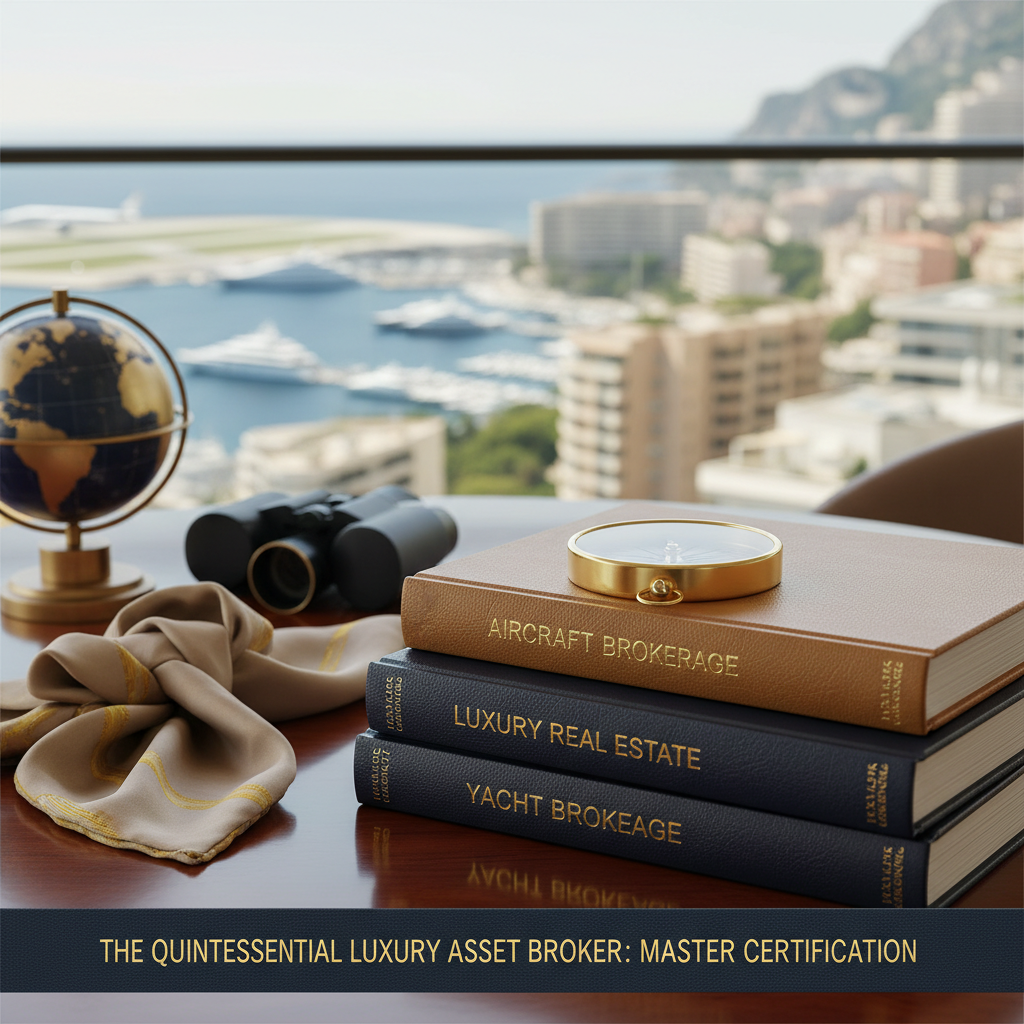
For professionals managing complex estates and multifaceted portfolios, the ability to broker transactions across high-value physical assets represents a distinct competitive moat. Achieving mastery through The Quintessential Luxury Asset Broker: Master Certification enables advisors, family office executives, and independent brokers to cross-leverage relationships across aviation, yachting, art, and real estate, catering directly to clients who demand holistic transaction management rather than fragmented transactional advice.
Prime Real Estate: The Flight to Sovereign Safe Havens
Alongside portable collectables, prime residential and commercial real estate remains the foundational bedrock of wealth preservation. From the Carré d'Or in Monte Carlo to Mayfair in London and the waterfront enclaves of South Florida, prime square metre valuations have maintained historic premiums despite elevated interest rate environments. This resilience stems directly from an acute supply-demand imbalance: the world's most coveted micro-destinations cannot physically expand their geographical boundaries to accommodate the burgeoning population of global centi-millionaires.
Furthermore, tax optimization, political neutrality, and personal security have surpassed purely architectural aesthetic preferences as the primary drivers of prime property acquisitions. Discerning intermediaries who complete the Luxury Real Estate Brokerage Course understand that modern real estate advisory transcends property showings; it requires an intricate knowledge of cross-border tax treaties, residency-by-investment structuring, private banking covenants, and architectural preservation guidelines.
Maritime and Aviation: Mobility, Discretion, and Regulatory Pressures
The private maritime and business aviation sectors serve as critical bellwethers for the broader luxury industry. Following unprecedented post-2020 charter utilization rates and subsequent order-book backlogs at northern European shipyards and aerospace original equipment manufacturers (OEMs), the industry is entering an era of operational maturation. Ultra-wealthy principals are increasingly examining the operational efficiency, regulatory compliance, and ecological footprints of their airborne and nautical assets.
In the maritime space, the global superyacht fleet is undergoing a quiet technological transformation. Emerging regulations in environmentally sensitive anchorages—particularly across Mediterranean marine reserves—are rendering obsolete vessels that lack advanced wastewater treatment, hybrid-propulsion architectures, or dynamic positioning systems. Owners are relying heavily on professional managers who possess a deep technical and legal vocabulary, a competency cultivated through the Luxury Yacht Manager Course.
Key operational currents dominating the luxury maritime and aviation narrative include:
- The Green Corridor Mandate: The implementation of stringent IMO 2030/2050 directives and European emissions trading systems, compelling shipyards and fleet operators to engineer methanol, hydrogen fuel cell, and battery-assisted power plants.
- Fractional and Co-Ownership Refinements: Increasing acceptance of structured co-ownership and fractional models among younger principals seeking capital efficiency without compromising bespoke operational access.
- Geopolitical Re-Routing: The re-engineering of Mediterranean, Caribbean, and Middle Eastern charter corridors in response to localized sanctions frameworks, maritime security threats, and evolving fiscal regulations.
- Turnkey Asset Management: The rising demand for integrated operations where technical maintenance, crew vetting, flag-state compliance, and charter revenue optimization are handled under unified governance protocols.
Wealth Governance and the Great Intergenerational Wealth Transfer
No macro trend will reshape the luxury landscape over the next two decades more profoundly than the estimated $84 trillion intergenerational wealth transfer. As Baby Boomers and Silent Generation patriarchs and matriarchs systematically transition family holdings, real estate empires, and operational businesses to Gen X and Millennial successors, the governing thesis of high-end consumption is being radically rewritten.
The emerging generation of family principals brings distinct philosophical priorities to the deployment of private capital. While their forebears often emphasized brand legacy, quiet institutional prestige, and classical craftsmanship, modern heirs demand radical transparency, ESG integration, digital interface agility, and authentic corporate values. Concurrently, their definitions of luxury emphasize unscripted, transformative experiences, regenerative travel, and venture philanthropy over ostentatious material accumulation.
Managing this generational transition requires sophisticated institutional architecture. As documented in our strategic analyses, single-family and multi-family offices have increasingly transformed into fully corporatised holding entities. Leaders preparing to guide these dynamic institutions through the Family Office Management Course develop the comprehensive competencies needed to structure multi-jurisdictional governance charters, balance competing familial visions, and orchestrate complex lifestyle, aviation, and art assets within unified wealth preservation structures.
Brand Strategy and the Hermès Paradigm: The Triumph of Disciplined Scarcity
Amid widespread industry discounting, retail footfall fluctuations, and channel overcrowding, certain iconic houses continue to post robust, counter-cyclical operating margins. A disciplined examination of these market leaders reveals a deliberate rejection of digital immediacy and artificial hype in favour of absolute artisanal integrity, client tiering, and strictly controlled production volumes. This phenomenon, which we have explored in our study of Hermès' enduring success and luxury strategy, demonstrates that authentic luxury thrives not on ubiquitous market penetration, but on the systematic engineering of desire through scarcity.
When luxury groups surrender to short-term shareholder expectations by saturating e-commerce channels and over-licensing their intellectual property, they erode the psychological pricing power that sustains luxury margins over generational timeframes. True value creation lies in cultivating an aura of inaccessibility. The client must earn the privilege of acquiring the maison’s most revered creations through demonstrable patronage, brand education, and genuine personal relationships with retail directors.
Professionals tasked with safeguarding or reviving legacy brands must master the delicate tension between tradition and relevant contemporary discourse. The Luxury Brand Management Course provides the strategic frameworks required to design long-term brand equity architectures, execute controlled distribution strategies, and establish qualitative clienteling protocols that permanently insulate the brand from cyclical retail downswings.
Practical Takeaways for Luxury Executives and Advisory Professionals
Translating these macro-level structural trends into tactical advantages requires a methodical, proactive approach. Luxury enterprise leaders, independent brokers, wealth advisors, and lifestyle concierges cannot remain passive observers of industry evolution. The following five-step strategic framework provides an operational blueprint for navigating the current market realities:
- Audit Client Portfolios for Tangible Asset Resilience: Conduct an immediate review of high-value client holdings across real estate, maritime assets, and fine art. Identify assets exposed to tightening maritime environmental standards, evolving municipal zoning restrictions, or shifts in international estate tax legislation, and establish preventative mitigation protocols.
- Transition from Transactional Commerce to Relationship Stewardship: Move operational resources away from broad, digital acquisition campaigns into high-touch, private client ecosystems. Invest in private salon environments, unlisted bespoke events, and dedicated clienteling directors capable of engaging UHNW principals on an intellectual peer-to-peer level.
- Institutionalise ESG and Decarbonisation Roadmaps: Acknowledge that the next generation of asset owners will not tolerate environmentally non-compliant operations. Whether retrofitting a 60-metre motor yacht or developing a branded residential compound, incorporate verifiably sustainable engineering, materials, and ethical provenance sourcing from day one.
- Bridge the Generational Governance Gap: Actively engage the rising heirs of family offices early in the advisory lifecycle. Incorporate discussions on venture philanthropy, impact-oriented collecting, and digital asset custody alongside traditional estate planning instruments to forge enduring multi-generational loyalty.
- Cultivate Cross-Discipline Technical Fluency: Break down the historic silos separating private banking, legal structuring, real estate, and lifestyle advisory. Modern high-net-worth clients expect their trusted advisors to comprehend how an art acquisition interacts with a collateralised private bank credit line or how an aircraft flag registry affects personal jurisdictional tax liability.
By executing these measures, advisory firms and luxury brands can insulate their business models from transitory consumer turbulence while positioning their operations to capture the high-margin opportunities emerging across the global ultra-wealth ecosystem.
The Technological Paradox: AI, Discretion, and Bespoke Human Touch
No discussion of modern luxury business can omit the transformative role of technological innovation. While consumer technology platforms have commoditised retail through instantaneous fulfillment and programmatic algorithms, luxury houses face a distinct challenge: how to leverage machine intelligence without eroding the warmth, intuition, and discretion that define genuine white-glove service.
Forward-thinking enterprises are deploying artificial intelligence not on the customer-facing frontline, but within operational intelligence and internal curation. Predictive analytics allow supply chains to manufacture precisely to bespoke demand, eliminating inventory waste and preserving scarcity ratios. Data-driven client modeling allows advisory teams to anticipate life milestones, personal preferences, and portfolio liquidity events without intruding upon client privacy.
Crucially, technology in the luxury realm must remain invisible. The final interface between the institution and the client must remain deeply, unequivocally human. The automated chatbot, algorithmic upselling prompt, or impersonal automated email represent the antithesis of luxury. Discerning clients require empathetic listeners, subject-matter authorities, and intuitive problem-solvers—qualities that no software architecture can replicate. As explored in our review of AI and luxury personalisation, the future of high-end commerce belongs to institutions that leverage algorithms for backstage operational excellence while doubling down on human artistry at the point of client contact.
Monaco: The Crucible and Living Laboratory of Global Luxury
In analyzing the shifting currents of high-end business, there is perhaps no geographic territory that mirrors the sector's complexities more faithfully than the Principality of Monaco. Compact, sovereign, and uniquely positioned at the cross-section of global private finance, maritime leadership, and elite lifestyle culture, Monaco acts as an authentic living laboratory for the global luxury economy.
With an unprecedented concentration of ultra-high-net-worth residents spanning over 140 nationalities, the Principality continually anticipates the lifestyle, security, and wealth preservation demands that will eventually permeate the broader global ecosystem. Discovering why Monaco serves as the strategic epicenter for luxury education, institutional maritime governance, and world-class wealth management provides invaluable perspective for professionals aspiring to lead at the apex of international commerce.
From the Port Hercule yachting cluster and the prestigious Private Banking institutions lining the Boulevard des Moulins to the sustainable urban developments of the Mareterra eco-district, Monaco embodies the harmonious reconciliation of absolute luxury, sovereign stability, and forward-looking ecological innovation. The operating models developed and refined within the Principality establish the benchmarks to which global luxury destinations must inevitably conform.
Conclusion: Engineering Enduring Value in an Era of Uncertainty
The contemporary luxury landscape is defined neither by unbridled optimism nor by imminent crisis; it is characterized by profound maturity, elevated discernment, and strategic recalibration. As the industry casts off the ephemeral exuberance of recent cycles, the fundamental laws of true luxury—scarcity, uncompromising craftsmanship, discretionary trust, and cultural relevance—have emerged with renewed authority.
For executives, entrepreneurs, and advisors, the directive is unequivocal: navigate the evolving macroeconomic realities by strengthening core competencies, cultivating multi-generational client loyalty, and committing to continuous technical mastery. In doing so, luxury professionals will not merely weather the headwinds of global market volatility, but will build sustainable, high-margin enterprises capable of defining the future of high-net-worth commerce.
Tagged
Written by
Monaco Academy Editorial
Editorial Team
Put this into practice
Courses and programs on this subject
Payment test 1.00 EUR (internal)
Internal payment test item. Not a real course. Do not purchase.

Luxury Lifestyle Concierge Course
Become a Certified Luxury Lifestyle Concierge, mastering the art of bespoke service and exclusive access for discerning clientele.

Private Jet Fleet Manager Course
Become a Certified Private Jet Fleet Manager, mastering the operational, financial, and regulatory complexities of elite private aviation.
Related programs
Continue reading
Related articles

24 October 2026 · 11 min
Monaco News and Insights — trend analysis with concrete examples
The Principality of Monaco continues to occupy an exceptional position in the global macroeconomic landscape, functioning not merely as a sovereign sanctuary for ultra-high-net-worth individuals (UHNWIs) but as an agile laboratory for the future of luxury c…
20 October 2026 · 12 min
Monaco News and Insights — deep-dive explainer with practical takeaways
In an era characterised by swift regulatory realignments, macroeconomic turbulence, and shifting global wealth corridors, tracking Monaco news and insights is no longer merely an exercise in following elite society or sovereign prestige. For family office p…

15 October 2026 · 13 min
Press Releases — deep-dive explainer with practical takeaways
In the rarefied echelons of luxury business, where reputation is paramount and perception shapes destiny, the humble press release has undergone a profound transformation. Far from its historical role as a mere factual announcement, today’s luxury press rel…