
Monaco News and Insights — trend analysis with concrete examples
The Principality of Monaco continues to occupy an exceptional position in the global macroeconomic landscape, functioning not merely as a sovereign sanctuary for ultra-high-net-worth individuals (UHNWIs) but as an agile laboratory for the future of luxury c…
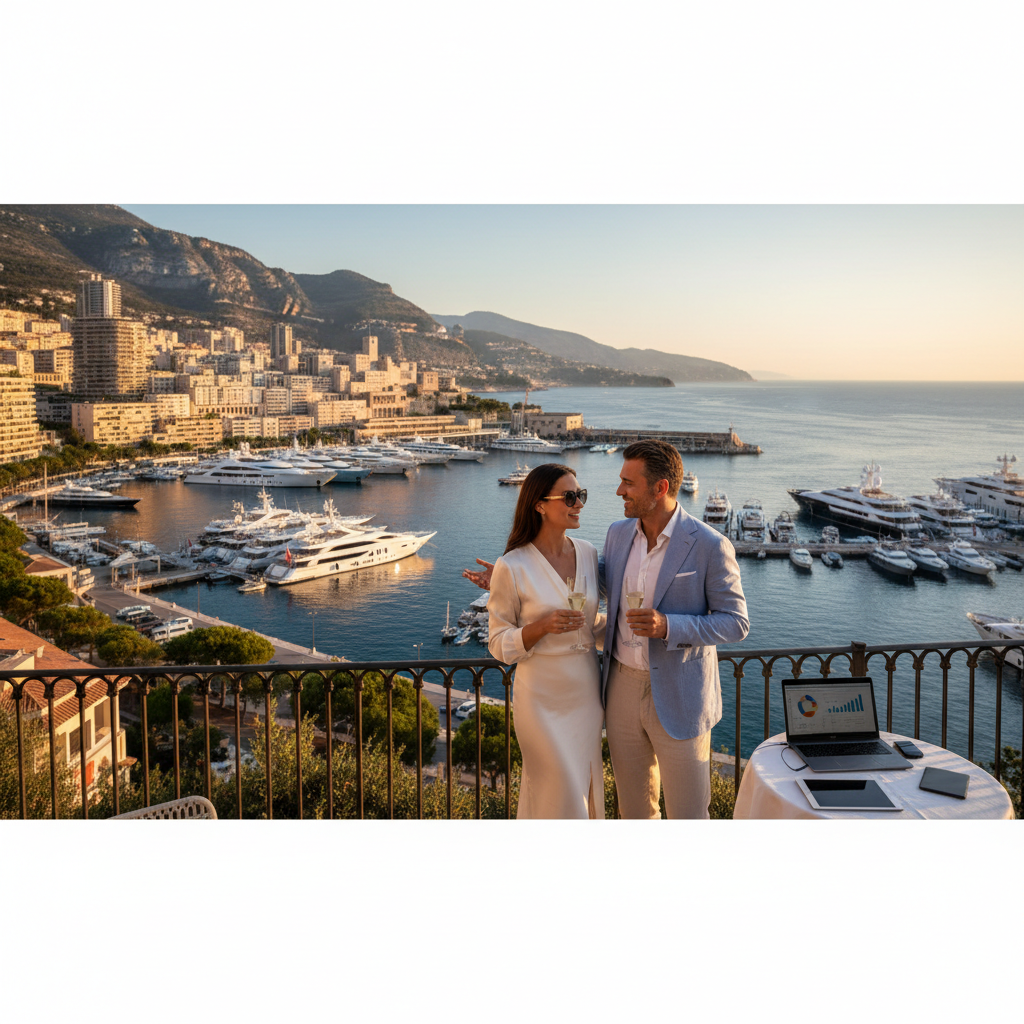
The Principality of Monaco continues to occupy an exceptional position in the global macroeconomic landscape, functioning not merely as a sovereign sanctuary for ultra-high-net-worth individuals (UHNWIs) but as an agile laboratory for the future of luxury commerce, capital stewardship, and sustainable maritime innovation. In an era characterised by regulatory tightening, geopolitical realignment, and shifting generational values, this two-square-kilometre sovereign enclave delivers critical signals for international executives, private wealth advisors, and luxury brand custodians worldwide. By examining contemporary market shifts through empirical data and operational case studies, our latest analysis explores the structural trends defining the Monegasque ecosystem and their profound implications for global commerce.
Far from remaining static, Monaco is executing a sophisticated long-term transformation. Driven by ambitious urban planning, a decisive institutional pivot towards green finance, and a generational transition across resident family offices, the Principality is proactively redefining the parameters of contemporary prestige. Professionals seeking to engage with this unique demographic must move beyond conventional assumptions of legacy privilege. Understanding how modern sovereign governance, environmental mandates, and wealth mobility intersect within the territory is vital for anyone operating at the apex of global commerce, an ethos explored in depth across our Monaco news and insights analysis on strategic shifts in wealth governance.
1. The Demographics of Capital: Generational Wealth Migration and Family Office Professionalisation
A central trend within the Principality is the changing profile of its residency base. While Monaco has long attracted established capital, recent data from the Monegasque Institute of Statistics and Economic Studies (IMSEE) reveals an influx of younger, commercially active principals. Entrepreneurs from fintech, green infrastructure, venture capital, and digital commerce are acquiring Monegasque residency at a markedly earlier stage in their liquidity lifecycles than their predecessors. This migration brings fresh capital and fundamentally disrupts how family balance sheets are deployed, governed, and preserved.
Historically, private wealth structures in Monaco operated with low-profile, administrative domestic offices. Today, we observe the rapid institutionalisation of Single Family Offices (SFOs) throughout the Carré d’Or and Fontvieille. These entities demand sophisticated multi-asset risk management, direct private equity capabilities, and clear cross-border legal alignment. The contemporary principal rarely permits capital to remain passive; instead, liquid portfolios are coordinated alongside venture building, direct co-investments, and impact-driven mandates.
Consequently, the demand for accredited fiduciaries and governance directors who possess both technical financial acumen and cultural fluency has surged. Navigating these expectations requires dedicated professional education, which can be cultivated through specialised training such as the Family Office Management Course. The modern family office executive within Monaco must understand not only trust administration and jurisdictional risk, but also the nuanced interpersonal dynamics of multi-generational succession planning.
Case in Point: Next-Generation Directives in Carré d’Or Single Family Offices
Consider the structural transformation observed across multi-generational estates in the Principality over the past twenty-four months. Second- and third-generation wealth inheritors are systematically recalibrating legacy asset allocations away from static sovereign debt towards alternative private credit and climate tech venture syndicates. In Monte-Carlo, an established multi-generational European industrial family recently overhauled its governance charter, mandating that 30 per cent of all new allocations conform to strict ESG parameters while establishing a dedicated co-investment arm operating from Boulevard des Moulins. This concrete case exemplifies how capital preservation in Monaco has evolved into an active, strategic enterprise requiring senior operators with holistic multi-disciplinary expertise.
Similarly, the relationship between private clients and domestic banking institutions has transitioned from transactional advisory to integrated strategic partnerships. Institutions operating within Monaco’s rigorous regulatory parameters are revamping their front-office advisory benches. Those seeking to master these complex advisory structures can explore the Private Banking Course, which addresses the precise intersection of Swiss-Monegasque cross-border compliance, portfolio diversification, and confidential client engagement.
2. Urban Transformation: The Spatial Economics of Mareterra and Prime Real Estate
Monaco’s physical geography presents one of the most compelling real estate studies on earth. With a total surface area of just over two square kilometres, land scarcity is absolute. Yet, rather than restraining economic vitality, this physical limitation has catalyzed remarkable engineering ingenuity and unprecedented capital appreciation. The landmark six-hectare eco-district Mareterra (formerly known as Portier Cove) exemplifies how the Principality redefines prime urban development through ecological engineering.
Scheduled to fully integrate into Monaco’s urban fabric, Mareterra introduces ultra-prime residential apartments, townhouses, and expansive public spaces along the Larvotto coastline. Crucially, the project has established new global benchmarks for real estate valuations, with transaction values frequently exceeding €100,000 per square metre. However, the commercial significance of Mareterra extends far beyond its record-setting balance sheets. The development acts as a live architectural case study in environmental mitigation, incorporating curved thermal insulation, marine biodiversity protection belts, and self-sustaining energy networks.
The ripple effects across the domestic property sector have been immediate. Surrounding residential avenues—including Avenue Princesse Grace and Boulevard de Suisse—have experienced an upward recalibration in prospective buyer expectations. Prospective residents no longer evaluate properties solely on location and square footage; energy efficiency, biometric building security, private wellness facilities, and low-carbon materials are now mandatory baseline criteria.
"Monaco's property market does not follow conventional European real estate cycles. Scarcity, stability, and stringent sustainability standards create an independent microclimate where exceptional quality commands unparalleled value."
Brokering transactions within this rarefied ecosystem requires exceptional sophistication. Advisors must possess an intimate understanding of Monegasque property law, urban planning statutes, and high-stakes negotiation protocols. For ambitious agents looking to operate at this altitude, the Luxury Real Estate Brokerage Course provides the structural competencies, valuation frameworks, and relationship-management tools essential for navigating seven- and eight-figure transactions.
Furthermore, broader structural trends in the domestic market confirm that high-net-worth buyers view Monegasque brick and mortar as a dependable macro-hedge against inflationary volatility. To understand how Monaco maintains this pricing resilience amidst shifting global real estate markets, review our analytical review of Monaco's evolving economic landscape for luxury professionals.
3. The Maritime Imperative: Decarbonisation, Port Hercules, and the Superyacht Economy
The superyacht industry represents an indispensable pillar of Monaco’s international identity and domestic commercial revenue. Port Hercules and the Yacht Club de Monaco serve as the global nexus for the luxury maritime economy, hosting the annual Monaco Yacht Show and setting the standard for superyacht brokerage, chartering, and naval architecture. However, the sector currently faces an existential transition: the imperative to decarbonise operations, adapt to stricter environmental regulations, and align with the sustainability expectations of younger charterers and owners.
Under the stewardship of H.S.H. Prince Albert II, Monaco has emerged as an outspoken champion of ocean conservation and maritime sustainability. This sovereign commitment has prompted practical shifts throughout Port Hercules. Initiatives such as the Monaco Energy Boat Challenge and the Sea Index—a carbon footprint measurement tool developed specifically for superyachts—demonstrate that environmental awareness is not merely theoretical rhetoric; it is rapidly transforming operational standards across the maritime sector.
Charter operators, shipyards, and brokerage houses that fail to adapt to these shifts face commercial obsolescence. Yacht owners are scrutinising auxiliary battery propulsion, alternative synthetic e-fuels, and dynamic anchoring systems designed to protect fragile seabed ecosystems such as Posidonia seagrass meadows. Managing these assets requires specialized maritime professionals who combine regulatory compliance with operational excellence.
Professionals tasked with overseeing modern vessels must master technical engineering trends, international crew employment conventions, and sophisticated fiscal administration. Gaining structured credentials via the Luxury Yacht Manager Course equips maritime operators with the operational mastery required to run contemporary superyachts safely, efficiently, and in alignment with strict environmental mandates.
Strategic Drivers Transforming the Monegasque Yachting Landscape
- Environmental Compliance and Port Mandates: Tightening European and Mediterranean environmental guidelines governing bilge discharge, acoustic pollution, and fossil fuel burn rates in territorial waters.
- Digital Charter Optimization: Implementation of transparent algorithmic charter pricing and real-time biometric passenger processing for customs and immigration within the Mediterranean basin.
- Alternative Propulsion Integration: Rapid adoption of hydrogen fuel cells and lithium-ion hybrid propulsion packages in new superyacht construction projects over 60 metres.
- Experiential Destination Sailing: Shifting charter demand away from static marina berthing towards remote exploratory voyages requiring ice-classed hulls and specialized expedition personnel.
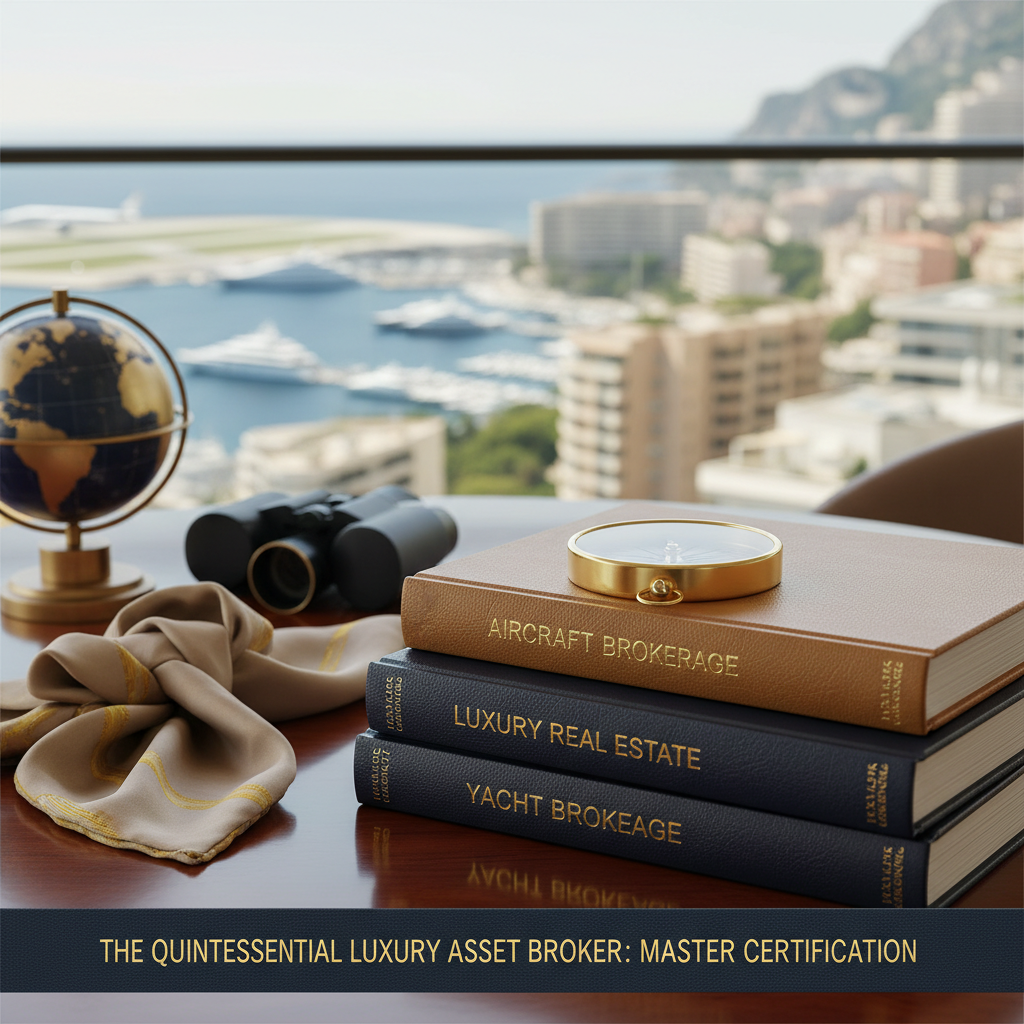
As transactional dynamics evolve, the distinction between yacht brokerage, private aviation, and luxury residential advisory is dissolving. Modern UHNW principals increasingly consolidate their high-value acquisitions under integrated multi-asset advisory mandates. Forward-thinking advisors can position themselves across this multi-sector reality through The Quintessential Luxury Asset Broker: Master Certification, which synthesises the legal, financial, and operational frameworks governing yachts, aviation, and super-prime estates.
4. The Evolution of Experiential Retail, Gastronomy, and Haute Horlogerie
The transformation of Monaco is equally evident across its luxury retail and hospitality sectors. The traditional retail boutique functioning solely as a point of sale is obsolete within Monte-Carlo. In its place, international luxury conglomerates—including LVMH, Kering, Richemont, and independent watch manufactures—are converting their flagship presences on Place du Casino and Avenue de Monte-Carlo into private salons dedicated to cultural curation, bespoke commissions, and private dining.
Consider the resurgence of haute horlogerie across the Principality. Monaco is not merely an affluent retail territory; it has emerged as a premier epicentre for rare horological collecting and independent horology patronage. Discerning collectors living in or visiting Monaco rarely seek standard catalogued timepieces. They demand private commissions, historical provenance, and intimate direct relationships with independent master watchmakers.
This dynamic has elevated the level of product knowledge required by client advisors and boutique directors. Retail personnel must function as scholarly horological historians and trusted asset advisors rather than conventional sales associates. This refined expertise is cultivated through specialized training like the Luxury Watch Dealership Course, which covers the provenance, complication mechanics, and secondary-market dynamics of fine horology.
Concrete Example: The Architectural Redesign of Monte-Carlo Prestige Hospitality
The Société des Bains de Mer (SBM)—the historic custodian of Monaco's luxury hospitality infrastructure—has executed extensive multi-year transformations across properties including the Hôtel de Paris, the Café de Paris, and the Amazonico rooftop dining concept. These developments are not cosmetic restorations; they represent calculated operational adaptations to satisfy modern luxury consumers who prioritise culinary theatricality, high-frequency entertainment, and architectural drama alongside traditional fine dining. To thrive in this demanding commercial environment, hospitality leaders must master both old-world service and contemporary lifestyle management, skills central to the Luxury Hotel Management Course.
5. Sustainable Capital, Philanthropy, and the Impact Economy
A consistent thread across all aspects of Monegasque commercial life is the integration of high-impact philanthropy with capital deployment. Far from functioning as an insulated financial outpost, Monaco maintains deep institutional alignment with international climate governance and ocean science, anchored by the Prince Albert II of Monaco Foundation.
This commitment directly influences how capital is managed within the Principality. UHNWIs residing in Monaco are increasingly directing their family wealth towards measurable environmental initiatives, creating a cluster of impact investors, ocean-tech accelerators, and conservation endowments. This philanthropic focus directly reframes luxury consumption, as modern principals expect their business partners, suppliers, and service providers to share their values.
- Baseline ESG Audits: Conducting systematic independent sustainability assessments across family portfolios, real estate holdings, and marine assets.
- Catalytic Philanthropic Foundations: Establishing bespoke domestic non-profit foundations that channel risk capital directly into non-traditional environmental protection models.
- Regenerative Venture Allocations: Deploying private equity capital into early-stage oceanic restoration, blue biotechnology, and clean energy enterprises.
- Transparent Governance Charters: Formulating multi-generational family mission statements that institutionalise ethical capital allocation for future heirs.
As these criteria gain traction across European wealth circles, advisors who lack fluency in impact frameworks and green financial instruments will find themselves at a distinct competitive disadvantage. Why this transformation matters so profoundly to the future of Monaco is documented in our comprehensive analysis on why Monaco remains uniquely positioned as an international hub for sustainable leadership.
6. Strategic Imperatives for Luxury Professionals and Advisors
The multifaceted trends shaping Monaco provide a clear blueprint for the skills and strategic approaches that luxury practitioners will need in the coming decade. As the Principality moves forward with initiatives like Mareterra, Port Hercules infrastructure modernisations, and regulatory digitisation, success requires deliberate operational transformation across three key dimensions:
1. Professionalising Discretion Through Rigorous Governance
Discretion remains the cornerstone of all commerce within the Principality, but the definition of discretion has fundamentally transformed. Historically, discretion implied procedural opacity and informal agreements. Today, authentic discretion is underpinned by robust compliance frameworks, ironclad cybersecurity measures, and transparent cross-border legitimacy. High-net-worth clients demand advisors who operate with impeccable regulatory integrity, protecting their principals from reputational vulnerability and legal exposure.
2. Bridging Multi-Asset Advisory Capabilities
The contemporary UHNWI does not compartmentalise their balance sheet into isolated silos. A real estate acquisition in Mareterra is linked to family office tax restructuring, superyacht construction financing, and long-term horological or fine art collection strategies. Service professionals can no longer afford to operate within narrow specialisations. Mastery of multi-asset relationships, cross-disciplinary transaction structures, and high-touch communication protocols has become essential for long-term commercial success.
3. Cultivating Cultural and Environmental Fluency
The contemporary luxury consumer in Monaco is international, culturally dynamic, and environmentally aware. Advisors, luxury brand directors, and concierge managers must master the subtle cultural nuances that govern relationships with family offices from Geneva, London, Dubai, Singapore, and New York. Concurrently, professionals must possess the operational literacy to speak credibly about maritime emissions, green building certifications, and sustainable asset management without slipping into hollow marketing rhetoric.
Concluding Reflections: The Monaco Blueprint
Monaco consistently proves that small sovereign territories can exert profound global influence through purposeful regulatory policy, agile economic innovation, and an unwavering commitment to excellence. The Principality does not merely reflect existing trends in the luxury landscape; it actively shapes them. By demonstrating that environmental stewardship, ultra-prime real estate development, and sophisticated financial administration can coexist profitably, Monaco provides a reliable preview of where global private wealth is heading next.
For executives, wealth managers, and entrepreneurs, the lessons from Monaco are clear: sustainable innovation, transparent governance, and rigorous ongoing education are no longer optional extras. They are the essential foundations for enduring success in modern luxury. As the market continues to evolve, those who invest in acquiring specialised, verified expertise will be best positioned to lead the next era of global luxury and wealth advisory.
Tagged
Written by
Monaco Academy Editorial
Editorial Team
Put this into practice
Courses and programs on this subject

Family Office Management Course
Become a Certified Family Office Manager leading ultra-high-net-worth families with bespoke financial, legal, and lifestyle solutions.

Private Banking Course
Become a Certified Private Banker and navigate the intricate world of high-net-worth individual financial management.

Luxury Art Dealership Course
Become a Certified Luxury Art Dealer and master the intricate world of high-value art acquisition, sales, and connoisseurship.
Related programs
Continue reading
Related articles
20 October 2026 · 12 min
Monaco News and Insights — deep-dive explainer with practical takeaways
In an era characterised by swift regulatory realignments, macroeconomic turbulence, and shifting global wealth corridors, tracking Monaco news and insights is no longer merely an exercise in following elite society or sovereign prestige. For family office p…

15 October 2026 · 13 min
Press Releases — deep-dive explainer with practical takeaways
In the rarefied echelons of luxury business, where reputation is paramount and perception shapes destiny, the humble press release has undergone a profound transformation. Far from its historical role as a mere factual announcement, today’s luxury press rel…
08 October 2026 · 12 min
Monaco Academy Insights: Navigating the Future of Luxury Leadership in a Dynamic World
Monaco Academy stands at the forefront of luxury business education, offering unparalleled insights into the evolving landscape of high-net-worth industries. This deep-dive explores strategic imperatives for luxury professionals and advisors, focusing on innovation, sustainability, and bespoke service in an increasingly complex global market.